

What You See Beyond the Steam
Watching the steam rise from the tea bowl, time flows gently. About 800 years ago, in the early Kamakura period, the founder of the Rinzai Zen sect, Zen Master Eisai, brought tea seeds from the Song dynasty in China, which is said to be the origin of today’s tea culture. Since then, matcha has remained unchanged, waiting in powdered form for the moment it meets hot water.
Many people start with the simple question, “Can you just drink matcha by adding hot water?” The answer is both yes and no. Indeed, you can enjoy it simply by dissolving the powder in hot water without using a tea whisk, and it is said that during the Muromachi period, people enjoyed matcha by just pouring hot water into a bowl and dissolving it without a whisk. However, there is also a quiet path leading to a bowl filled with deep lingering flavor.
Green Memories Connecting Time
Matcha is powdered green tea characterized by shaded cultivation (covered cultivation) of tea trees and a method where the harvested leaves are not rolled. This unique process produces tea leaves that become vividly green due to the shading and increase amino acids like theanine, which is the source of umami, enhancing the flavor.
The history of matcha did not begin in Japan. Matcha did not originate in Japan but traces back to tea consumed during the Song dynasty on the Chinese mainland. However, the culture nurtured in Japan eventually built the spiritual world of the tea ceremony, discovering an infinite universe within a single bowl of matcha.
The Secret Conversation Between Powder and Hot Water
The basics of preparing matcha are surprisingly simple. Sift 2g of matcha (about 1.5 tea scoops or 1 teaspoon), add 60ml of hot water at 80°C, and whisk quickly with a bamboo whisk for 15 seconds. This is the golden ratio for thin tea.
There is also a deep reason behind the temperature. The umami component in matcha, theanine, is more easily extracted at lower temperatures, while the bitterness component, catechin, is released more at higher temperatures. The ideal water temperature is between 80°C and 90°C, which maximizes the flavor, color, umami, and sweetness of matcha.
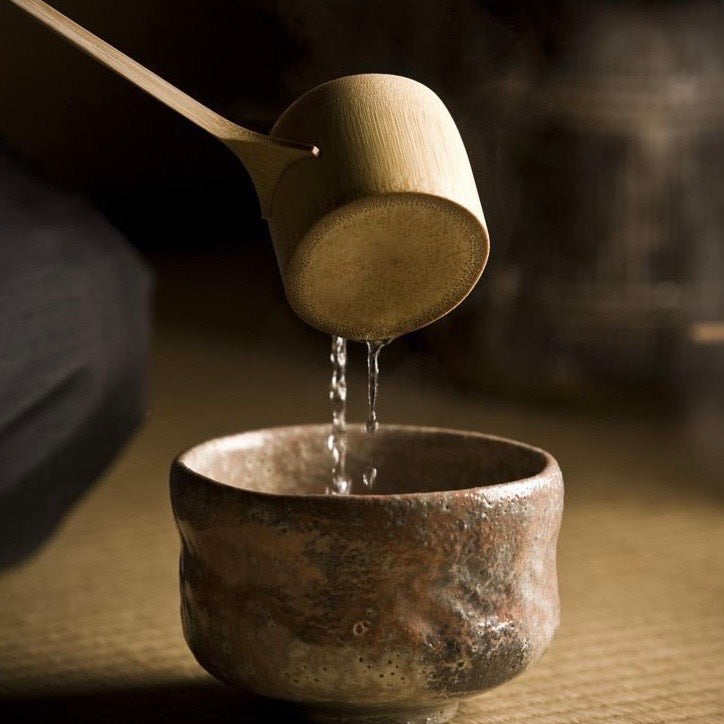
Many people may wonder about the tools. Is it impossible to prepare matcha without a bamboo whisk? Actually, you can enjoy delicious matcha even without a whisk or tea bowl. Tea bowl: a vessel for preparing matcha. Traditionally, a tea bowl is used, but for easy preparation at home, any bowl-shaped container will do. Whether a mug or a small bowl that fits in your palm, what matters most is the heart you bring to matcha.