

The single seed sown by Jishin Shonin
The history of tea in Wazuka Town is said to have begun in the Kamakura period when the high priest Jishin Shonin, who was at Kaijusanji Temple, received tea seeds from Myoe Shonin of Toganono, known as the founder of the tea industry, and cultivated them at the foot of Mount Jubusan.Imagine the flow of 800 years. The miracle of a practice that began from a single seed and has continued uninterrupted to this day—that is the tea industry of Wazuka.
Mount Jubusan is located northeast of Wazuka Town, on the border with Ujitawara Town, and is the highest peak in the southern Yamashiro region.At the foot of this sacred mountain, Jishin Shonin surely watched over the tea seedlings in silence. Tea was treasured as medicine at the time, but surely even then, a deep calming power resided in each cup.
Tea from the imperial estate loved by the Imperial family
During the Edo period, it became Imperial property, and Wazuka tea was supplied to the Kyoto Imperial Palace.。When Tokugawa Kazuko (later Soku Fuku Mon’in, 1607–1678), daughter of the second Tokugawa shogun Hidetada (1579–1632), became the Empress consort to Emperor Go-Mizunoo (1596–1680), Wazuka tea was presented to the Imperial court.This historic moment proves that Wazuka tea holds cultural value beyond being a mere luxury item.
Holding a special status as imperial estate land until the Meiji era, this brought pride and responsibility to Wazuka’s tea farmers and drove their relentless pursuit of quality. Wazuka tea, recognized as tea for the Imperial family, deeply embodies Japanese aesthetics and spirituality.
Kirika (mist fragrance)—a unique flavor woven by nature
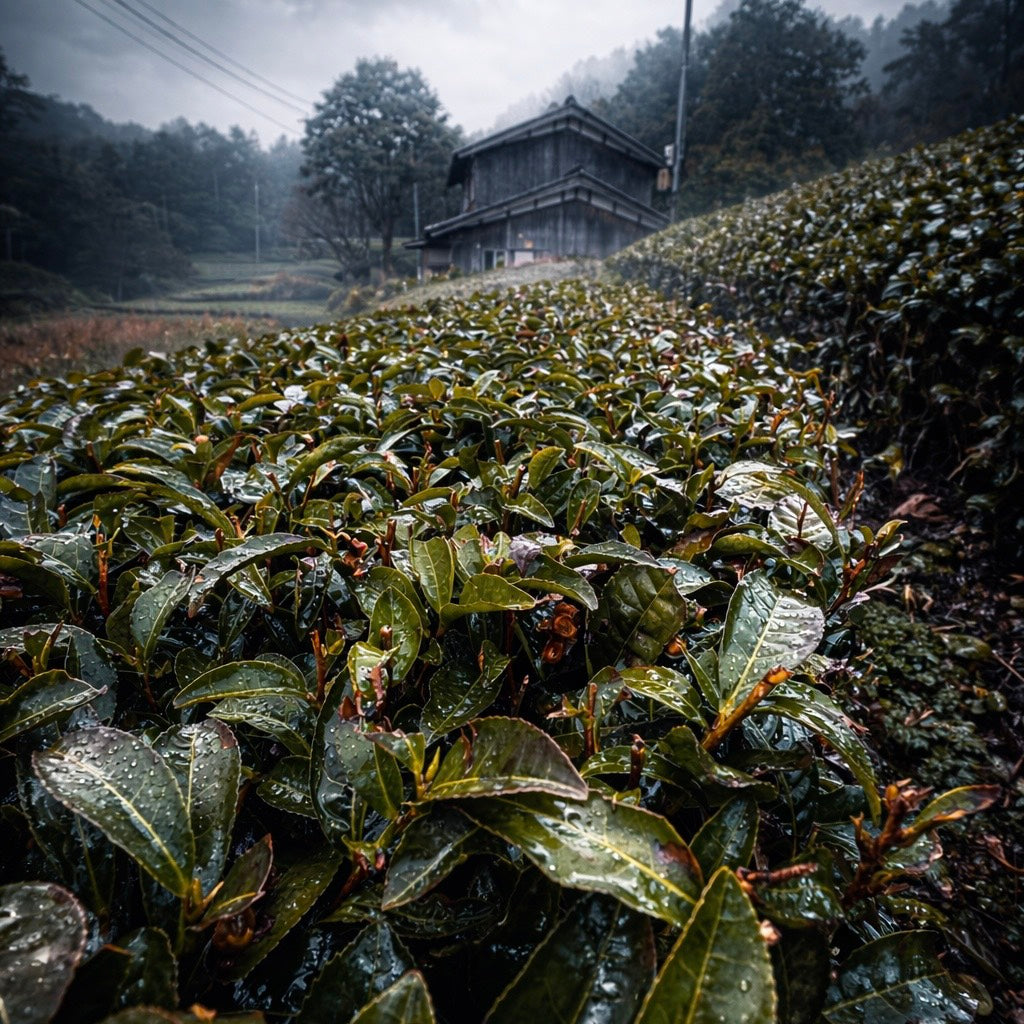
In the Yamashiro Basin where this region is located, the unique terrain causes significant temperature differences daily and annually, which helps concentrate the tea’s umami and sweetness within the leaves. Also, the Wazuka River flowing through the town center and the basin’s influence cause frequent mist, which protects the tea leaves from direct sunlight and keeps the new buds tender.。
It is said that the tea leaves of Wazuka have a scent called "Kirika" (mist fragrance), created by the large temperature differences between day and night.This mist fragrance is the main reason MIOKA is so committed to Wazuka. A delicate aroma created by the laws of nature that machines cannot reproduce. It lingers in memory beyond time and place, encapsulating the very landscape of Wazuka in a single cup.
The tea plantations spread across about 600 hectares in the mountain valleys at elevations between 100m and 600m, and around 300 tea farming families have protected them over several generations.The diversity woven by each individual farmer and the inherited techniques—this is the source of the richness of Wazuka tea.