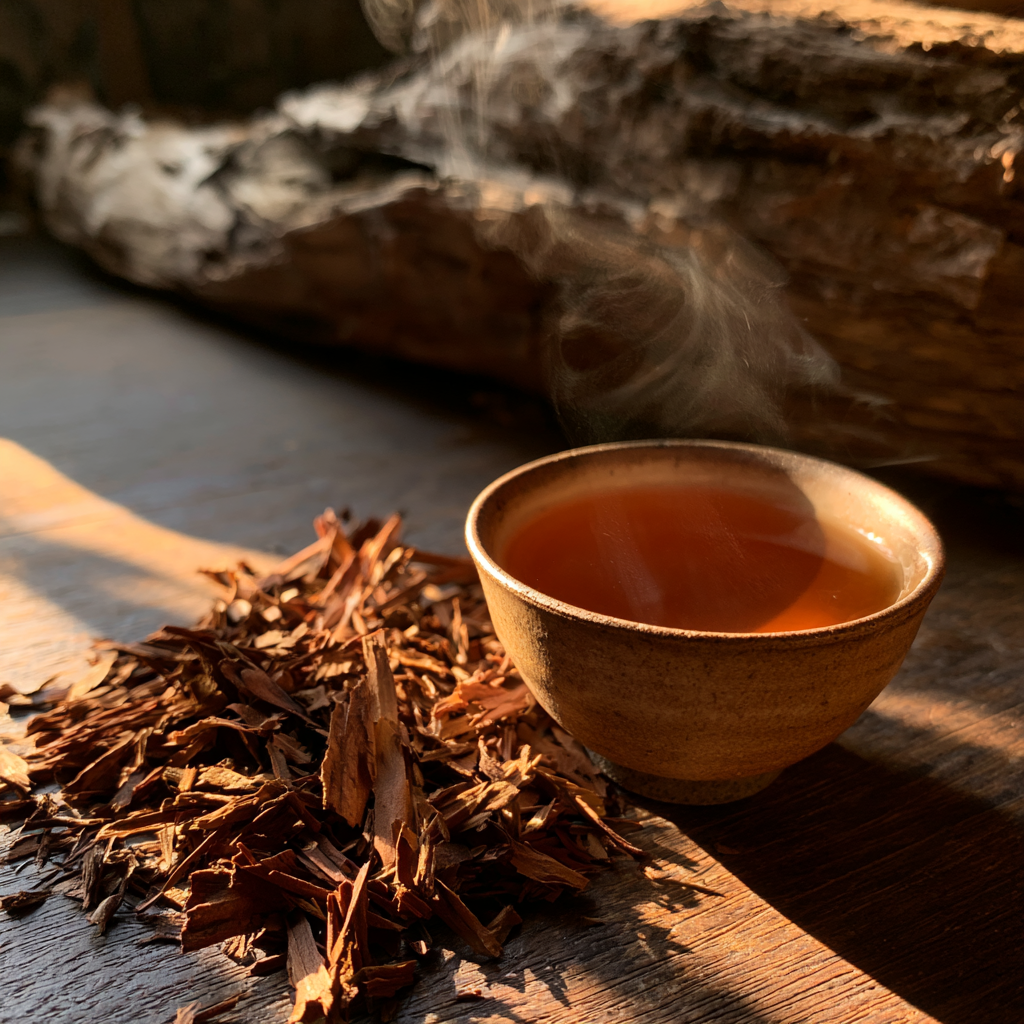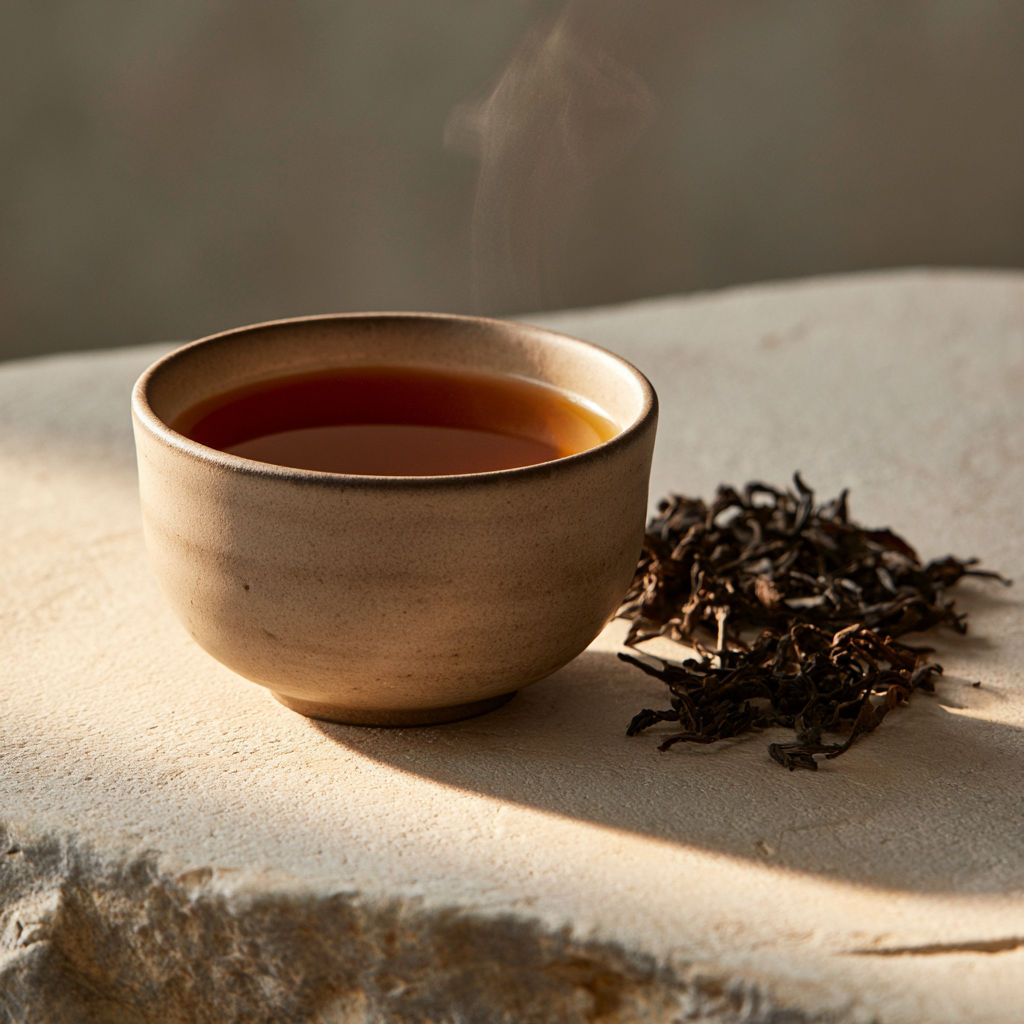


The freshness of tea, the toastiness of rice.
Two staples meeting in a single cup —
the everyday tea that Japanese domestic life produced.
Genmaicha — where tea meets toasted rice.
What is Genmaicha
Genmaicha is sencha blended with toasted rice. Rice, the staple of the Japanese table, and sencha, the everyday tea — two things at the centre of daily life, laid over one another. It is said to have come out of the practical wisdom of the household.
The toastiness of the rice lightens the freshness of the tea. It never competes with a meal, and you don't tire of it however often you drink it. Unpretentious, and quietly lovely — that is genmaicha.
Rice Blossoms

Look closely between the leaves and you'll find grains of rice that have burst open white. Rice that pops during toasting is called hana — flowers — and scattered through the green, those small points of white do look a little like wildflowers. The way genmaicha looks is part of what makes it.
HOMIYABI
MIOKA's genmaicha, HOMIYABI, is made with organically grown leaves from Wazuka, Kyoto, certified under Organic JAS. In its name, ho is the ripened ear of rice and miyabi is the grace that lives inside ordinary things — a wish that even the most everyday cup might be beautiful.
How to Brew
| Leaves | 4–5 g (for two) |
| Water | approx. 200 ml — properly hot is fine |
| Steeping | approx. 30 seconds, kept short |
With genmaicha, fragrance leads. Brief steeping in hot water brings the toastiness of the rice forward at its best. Pour without ceremony — alongside a meal, or in the lull of an afternoon.
To see where genmaicha sits within Japanese tea as a whole, read A Map of Japanese Tea.
The toastiness of rice, the freshness of tea.
Where the two overlap, there is the richness of an ordinary day.
Fragrance Beyond Time and Borders.