



MIOKA MOMENT
Matcha -organically glown- (Okumidori) | SHINSUI
MIOKA MOMENT・Organic Matcha (canned)・30g
- The silence is filled with greenery.
Choose options
MIOKA MOMENT・Organic Matcha (canned)・30g
- The silence is filled with greenery.
MIOKA MOMENT・Organic Matcha (canned)・30g
- The silence is filled with greenery.
| Contents | 30 g — around 15–20 bowls |
| Character | Fragrant, with deep umami. Gentle bitterness |
| Tools | No bamboo whisk required — a milk frother or spoon works |
| Storage | Away from direct sunlight, heat and humidity. Use soon after opening |
If this is your first time
1.5–2 g of matcha, 60–70 ml of water at 70–80℃. That's all it takes.
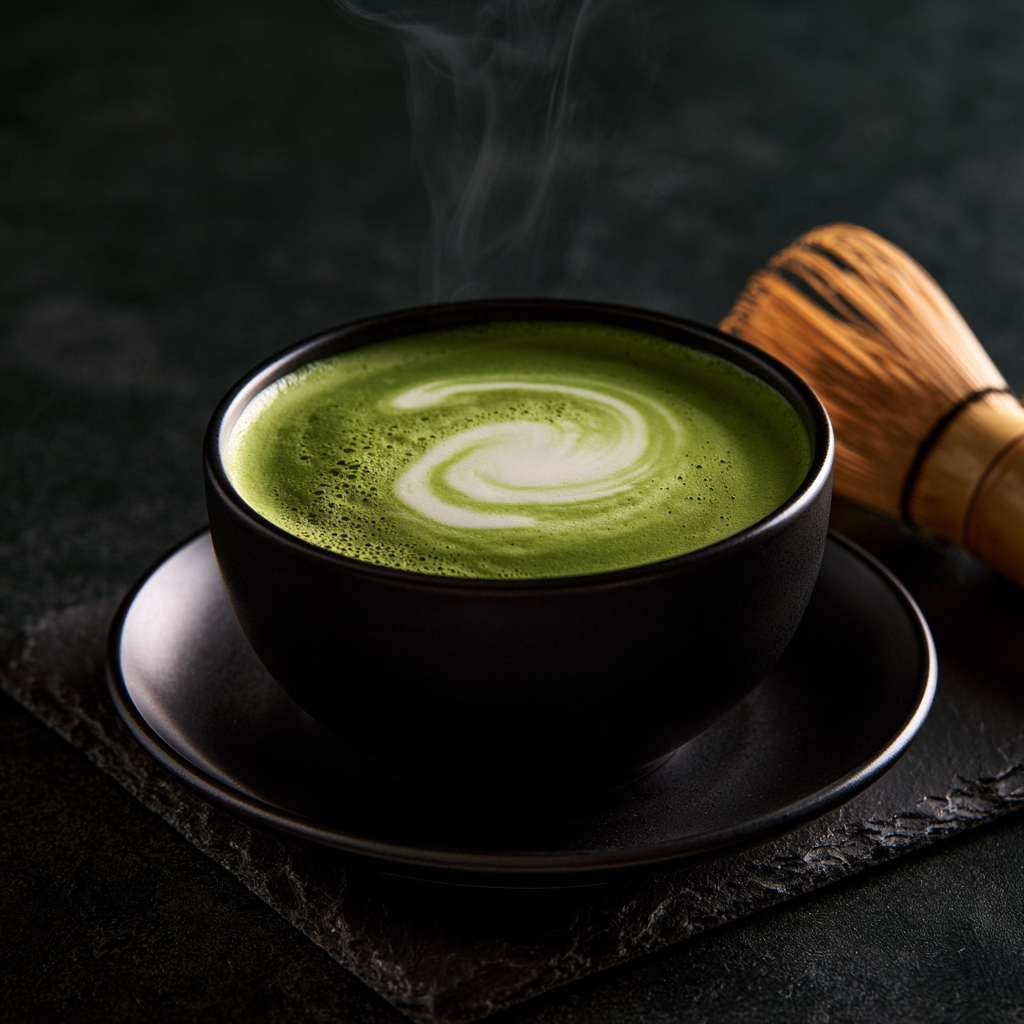
→ How to Whisk Matcha → Matcha Latte
SHINSUI or SENRO?
For a fuller fragrance and denser umami, this one — SHINSUI (Okumidori).
For a balance of aroma, umami and gentle bitterness, SENRO (Yabukita).
About the origin
Wazuka, Kyoto, is a principal growing region for Uji tea.
Of all the tencha — the raw leaf for matcha — produced in Kyoto Prefecture, 49.0% comes from this town.
River mist rises through the valley and wraps the leaves, acting as a natural shade.
The technique of shade-growing was born from people imitating what the land was already doing.
→ About Wazuka (ORIGIN) → The living tea landscape behind Uji tea
Organic stone-ground matcha
Okumidori — “SHINSUI”
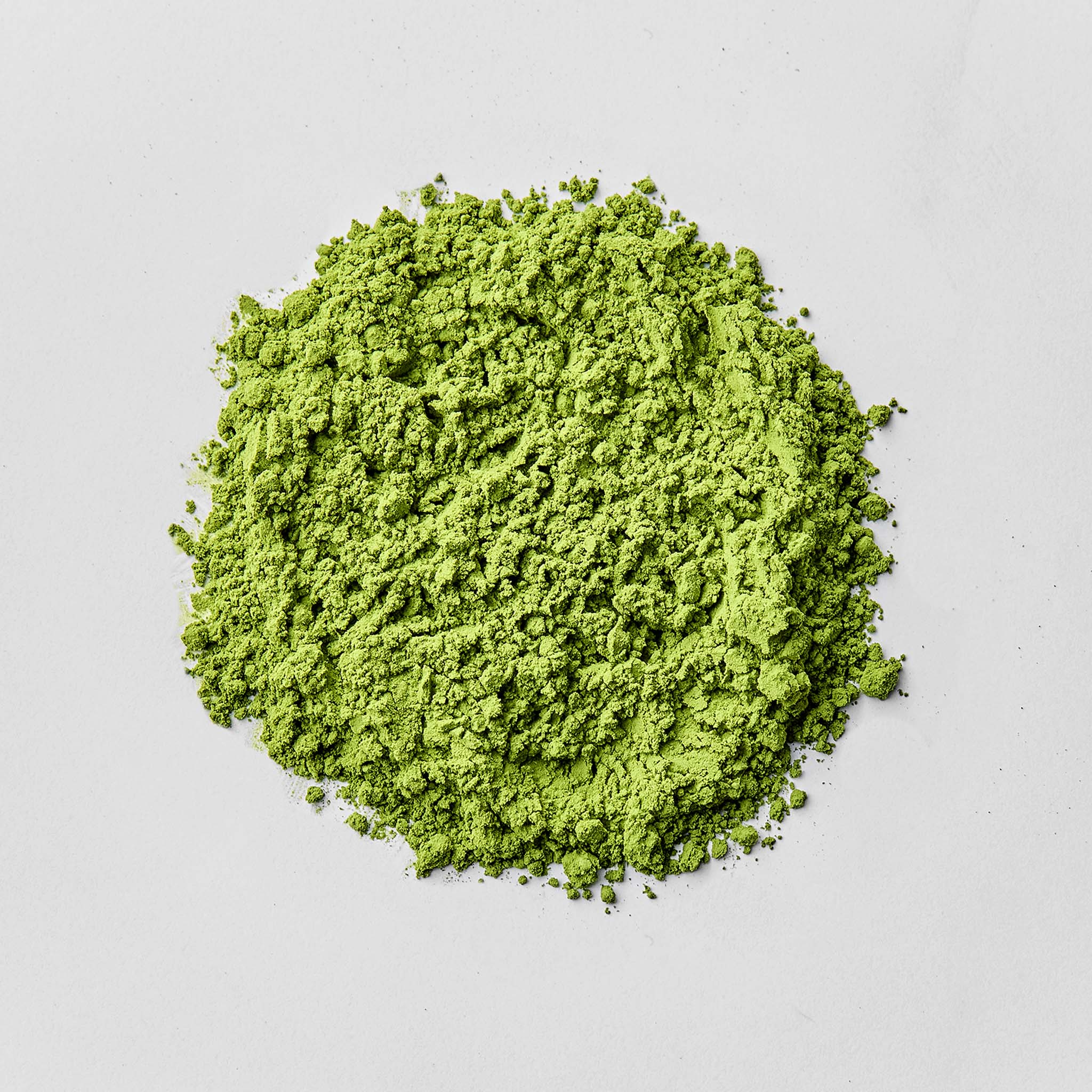
A deep, beautiful green, and a clear roundness.
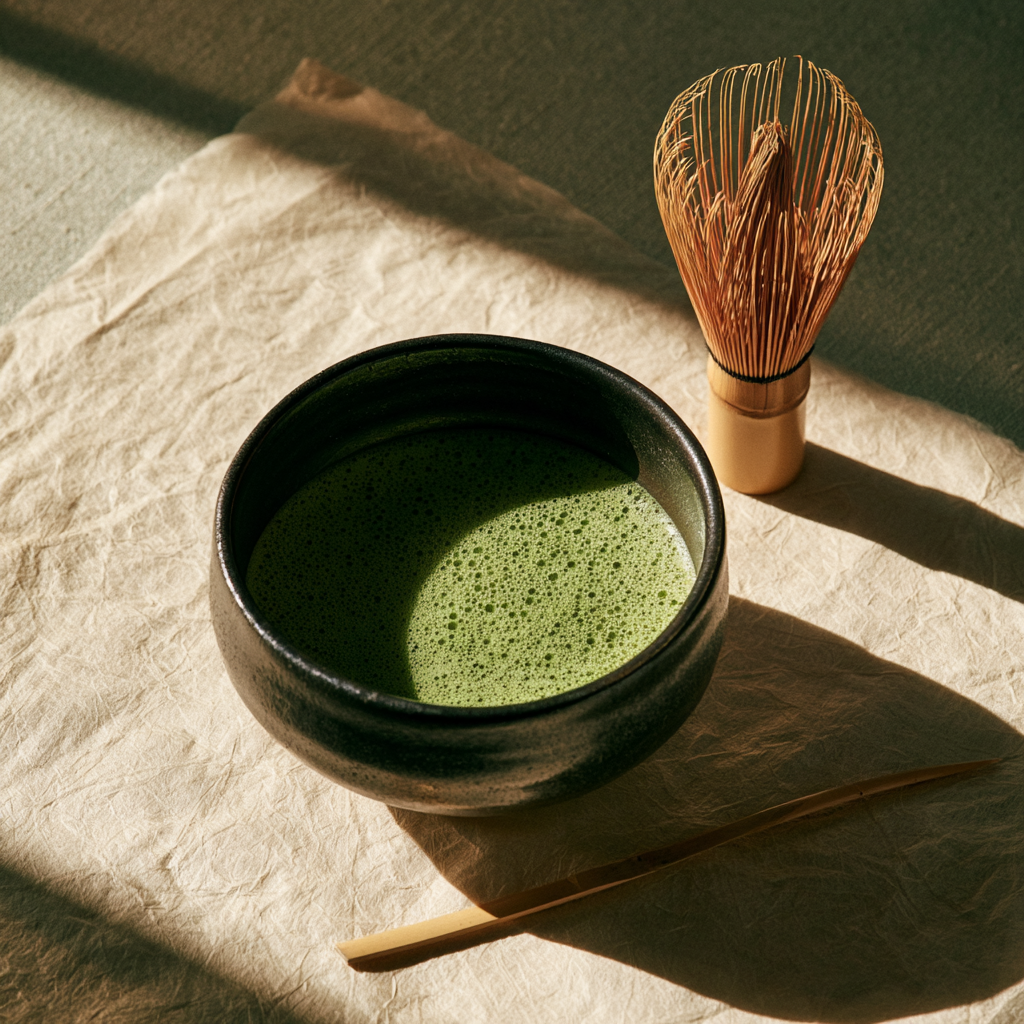
A vivid, deep green spreading across the bowl.
On the palate, a soft umami opens smoothly, and with a mild bitterness it carries into a clean finish.
SHINSUI is made from the first-flush harvest of Okumidori, organically grown in Wazuka, Kyoto.
Okumidori is a cultivar that takes on a deep green and carries a fresh, clean aroma. Rather than asserting itself through strong bitterness or an unusual scent, it lets you taste the umami and texture of matcha calmly. That is its appeal.
Grown in an organic tea garden, watching the leaves as they come.
The fields are managed to the Organic JAS standard.
No synthetic pesticides or fertilisers — the soil is built up, and pests and weeds are watched rather than sprayed. Recording the materials and processes used, and holding to the certification standard year after year, is part of the work of organic farming.
Rather than harvesting efficiently and in volume, we care about the colour, aroma and umami the leaves will have once they become matcha.
Covered in black shade, growing umami and green.
As the new shoots come, the whole field is covered with black shading material to block the sunlight.
Under sunlight, part of the umami compounds in the leaf convert into the compounds behind astringency and bitterness.
By limiting light during this crucial period before harvest, the umami stays in the leaf, drawing out the vivid green and rounded flavour that matcha is known for.
The deep green of Okumidori is not created after picking. It is grown, little by little, in the field where the shoots come up.
First flush, hand-picked one bud and two leaves at a time.
We harvest the first flush — the first growth of the year.
One bud at the tip of the new shoot, and the two young leaves opening beneath it. This tender part is called isshin-niyo, one bud and two leaves.
The pickers check the state of each shoot and take them by hand, one at a time.
Rather than cutting the field mechanically in one pass, they judge how the buds have grown and how soft the leaves are, selecting the better parts — which means there is a limit to how much can be picked in a day.
It keeps hard leaves and thick stems out, and it lets the delicate aroma and smooth umami of Okumidori come through.
Hand-picked shoots become tencha, the raw material of matcha.
The picked shoots are steamed while still fresh, then dried without rolling — unlike sencha.
What this produces is tencha, the raw material of matcha.
Stems and leaf veins are removed from the dried tencha, and the softer leaf is selected before it goes to the mill.
Matcha is not ordinary tea leaf simply ground into powder.
Grown under shade, hand-picked one bud and two leaves at a time, steamed, dried without rolling, and sorted — it is made from tencha, grown for the purpose and taken through every one of those steps.
One 30 g tin takes about an hour to grind.
The finished tencha is ground on a stone mill, a little at a time.
One mill produces around 30–40 g of matcha per hour. SHINSUI comes in a 30 g tin, so a single tin takes roughly an hour to grind.
Turning the mill faster generates friction heat, which damages the delicate aroma and vivid colour the leaf holds.
So it is ground slowly and carefully, without haste and without adding heat.
A deep, beautiful green, and a flavour without hard edges.
You feel the density of matcha, but no bitterness is left behind — a smooth bowl.
Name : Grganic matcha
Ingredient Name : Organic green tea (Kyoto Prefecture)
Contents : 30g
Expiration date : Described on the bottom of the can outside the frame
Storage method : Avoid direct sunlight, high temperatures and humidity, and be careful of lingering odors.
Seller : Renon Co., Ltd.
Manufacturer : Nakai Tea Factory Ltd.
● Freshness matters with tea. Please enjoy it soon after opening.
● Take care when handling boiling water.