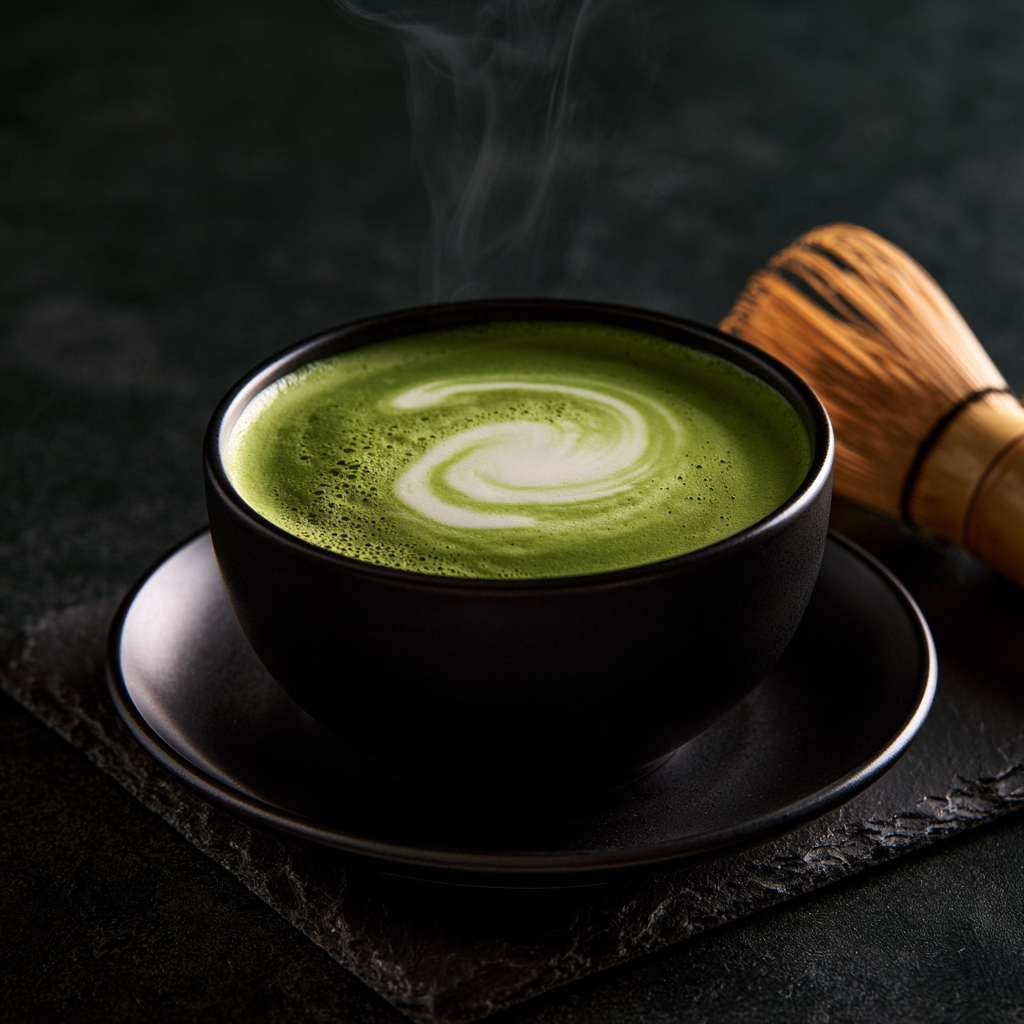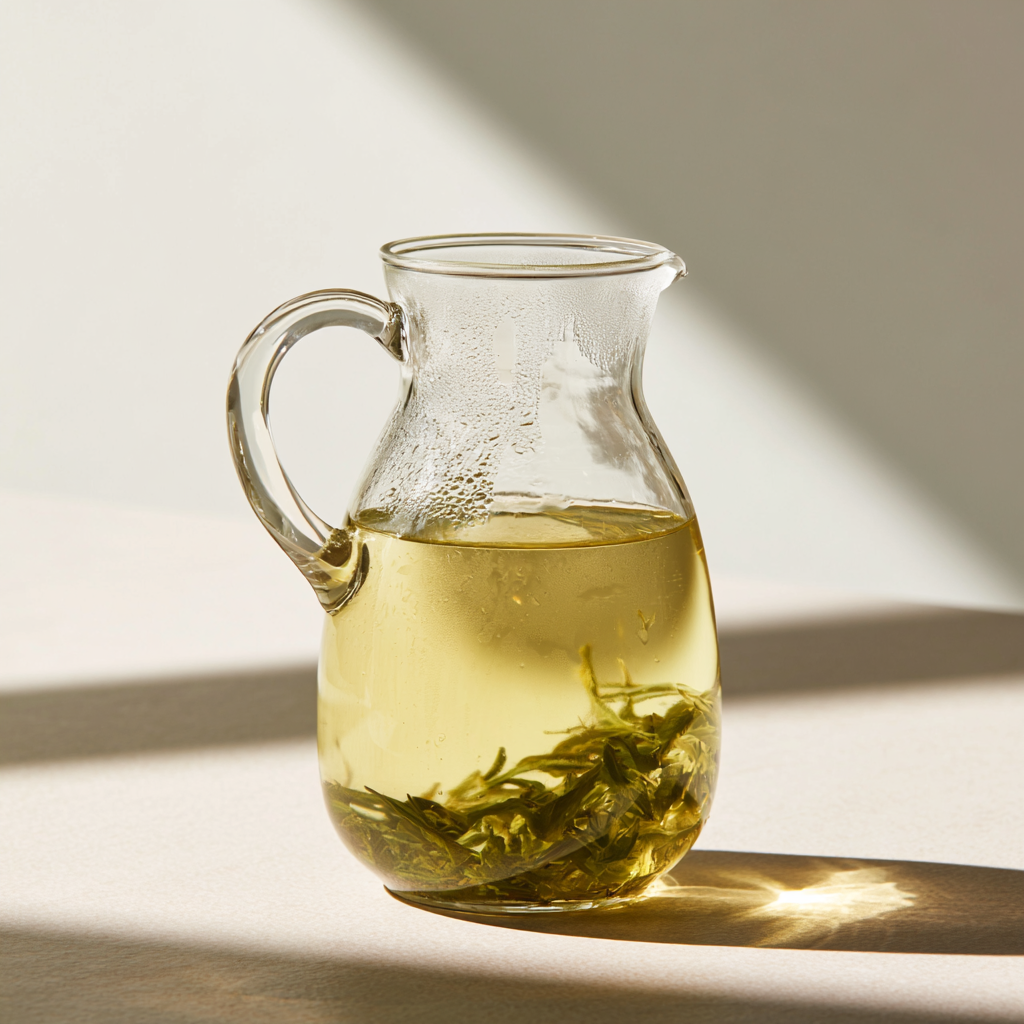


Roasted tea and milk suit each other well.
Lower in caffeine, too —
which makes it right for the end of a day.
Hojicha Latte — from leaf or powder.
Two Methods
There are two ways to make a hojicha latte: simmering leaves in milk, or dissolving powder. The result and the effort differ, so here is the distinction first.
| KOHZEN (leaf) | KUNZEN (powder) | |
|---|---|---|
| Method | Simmered in milk | Worked into a paste, then milk |
| Effort | Needs straining | No straining |
| Flavour | The aroma of the leaf comes through directly | Strength is easy to adjust |
| Suits | An unhurried weekend | Every day, in little time |
From Leaf
| KOHZEN (loose leaf) | 6–8 g |
| Water | 50 ml |
| Milk | 200 ml |
STEP 1 Open the leaves in a little water
Put 50 ml of water and 6–8 g of leaves in a small pan and simmer gently until the leaves have opened out — about 30 seconds.
Opening them in a little water first brings out more aroma than adding them straight to milk.
STEP 2 Add milk and infuse
Add 200 ml of milk and warm slowly over a low flame. Take it off the heat when small bubbles form around the edge of the pan.
Do not let it boil. Boiled milk skins over, and the aroma goes with it.
STEP 3 Strain
Pour through a strainer into your cup. Press the leaves lightly with a spoon to take the last of it.
From Powder

| KUNZEN (powder) | 2–3 g |
| Water | 30–40 ml — properly hot is fine |
| Milk | 120–150 ml |
The order is everything. Pour milk straight onto the powder and the fat keeps it from dissolving.
STEP 1 Work it into a paste
Put the powder and 30–40 ml of hot water in the cup and stir with a spoon until smooth. Unlike matcha, properly hot water is fine here — it lifts the toasted aroma.
STEP 2 Pour in warmed milk
Bring the milk to around 60℃ and pour slowly. Boiling takes the sweetness out of the milk.
Iced

With either method, make it stronger than you would for a hot cup. Allow for the ice diluting it.
Put ice and cold milk into the glass first, then pour the strong hojicha in quietly. The white and the pale brown separate cleanly into layers. Stir before drinking.
Compared with a Matcha Latte
| Hojicha latte | Matcha latte | |
|---|---|---|
| Water temperature | Properly hot is fine | 70–80℃ |
| Tools | A spoon is enough | A chasen helps |
| Caffeine | Lower. Fine in the evening | Higher. Morning or afternoon |
| Flavour | Toasty, faintly sweet | Dense, with bitterness giving definition |
More
Over vanilla ice cream
Work KUNZEN into a thick paste with a little hot water and pour it over vanilla ice cream. The affinity between toasted tea and dairy makes a dessert on its own.
In baking
Into cookie or pound cake batter, allow roughly 5–8 g per 100 g of flour. Hojicha holds its aroma through baking — that is its strength. This use belongs to the powder.
Soy and oat milk
Hojicha works well with soy milk. With oat milk, the toastiness layers further.
For the end of the day
Organically grown leaves from Wazuka, carefully roasted.
More on hojicha itself: #T004|What is Hojicha. Making it with matcha instead: #R003|Matcha Latte.
A fragrance raised by fire, dissolved into milk.
A gentle cup to close today.
Fragrance Beyond Time and Borders.