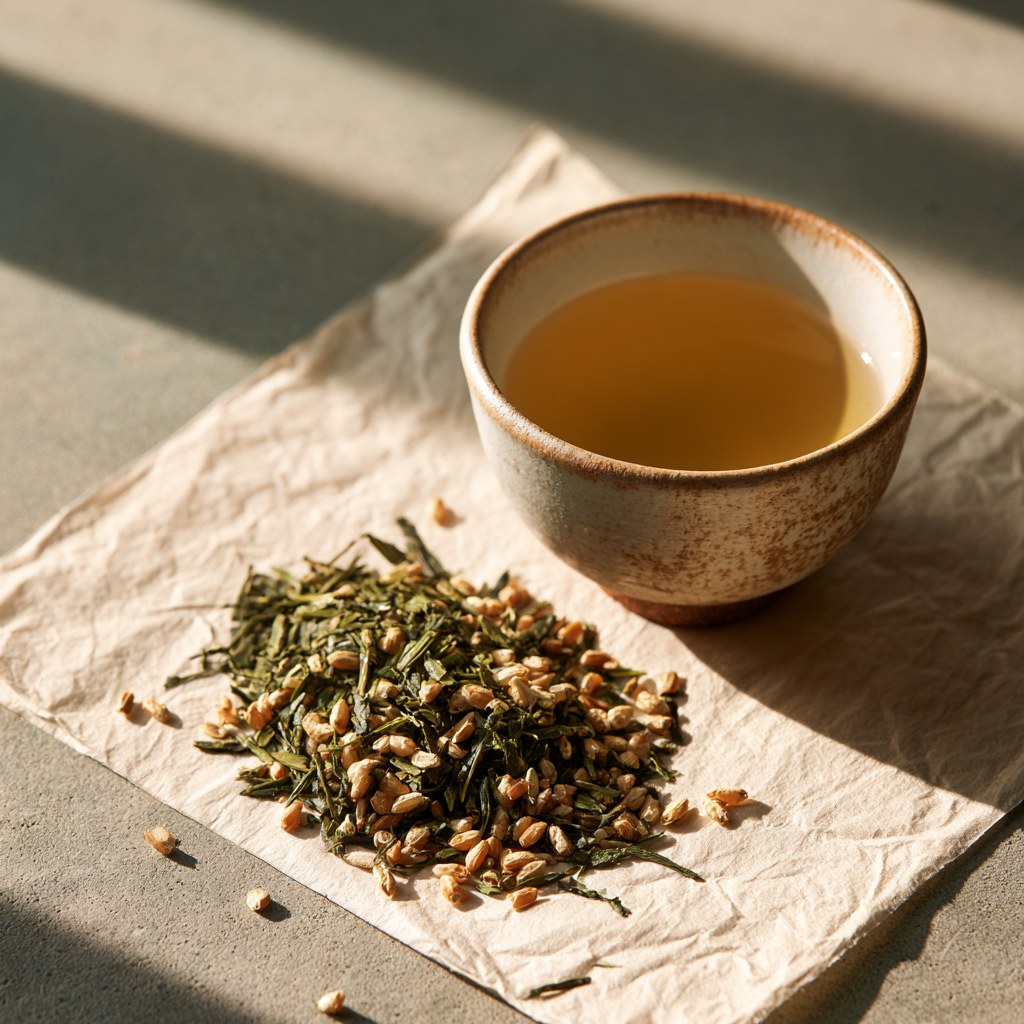


Even a country of green tea has its black tea.
The same leaf, given the time that oxidation takes,
turns into an amber fragrance.
Wakocha — the black tea of a green tea country.
What is Wakocha
Wakocha is black tea made from Japanese leaves. The same Camellia sinensis that becomes matcha or sencha is withered rather than steamed, rolled, and fully oxidised — given time to grow its fragrance until the green has turned amber.
Black tea production in Japan began in the Meiji era as an export industry. That craft was very nearly lost to history, and growers across the country are now bringing it back. Wakocha is old and new at once — the other face of Japanese tea.
The Time of Oxidation

Green tea is steamed straight after picking to halt oxidation. Wakocha does the opposite: the leaves are withered slowly to draw off moisture, rolled to break down the cells, and left to oxidise through the action of their own enzymes. In that time a fragrance appears that green tea never has — something closer to flowers and fruit — and the liquor deepens into a clear amber.
Which is to say the fragrance of wakocha is not added. It grows inside the leaf. Oxidation is simply the name for the time in which a leaf changes its own scent.
A Gentler Black Tea
| Wakocha | Black tea elsewhere (in general) | |
|---|---|---|
| Astringency | Low, rounded | Firm and present |
| Sweetness | Faintly sweet without sugar | Often built for milk or sugar |
| How to drink | Straight is best | Wide range, milk tea included |
| Food pairing | Sits naturally with wagashi and Japanese food | Baked goods, scones |
With the bitterness and astringency held back, the sweetness and fragrance of the leaf itself come straight through — if black tea has never quite suited you, wakocha may change that.
WASAI
MIOKA's wakocha, WASAI, is made by fully oxidising organically grown leaves from Wazuka, Kyoto, certified under Organic JAS. Try it straight first. In the afternoon light, take the amber colour and the gentle sweetness as they are. Cold-brewed, the astringency recedes further and a clean sweetness stands out — good for summer.
To see where wakocha sits within Japanese tea as a whole, read A Map of Japanese Tea.
The time it takes a green leaf to turn amber.
All of it, poured into one cup.
Fragrance Beyond Time and Borders.