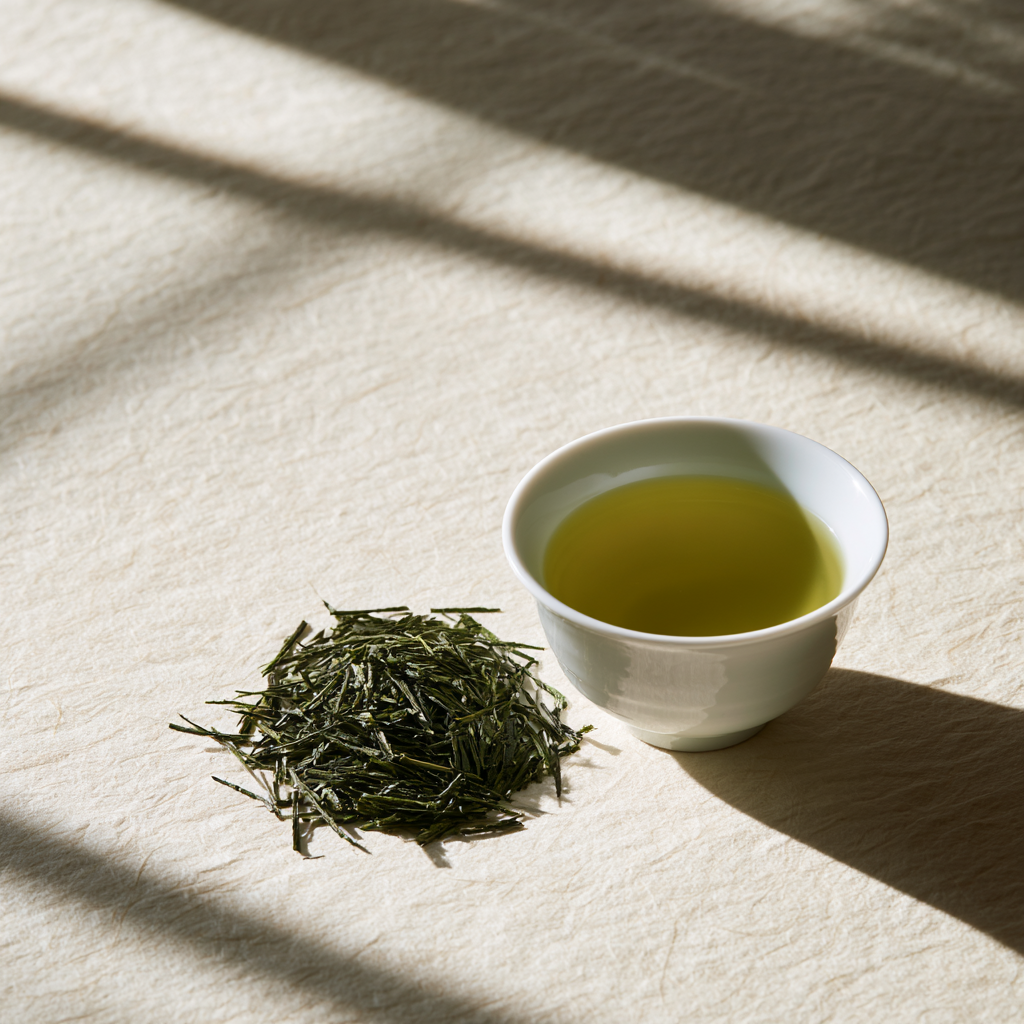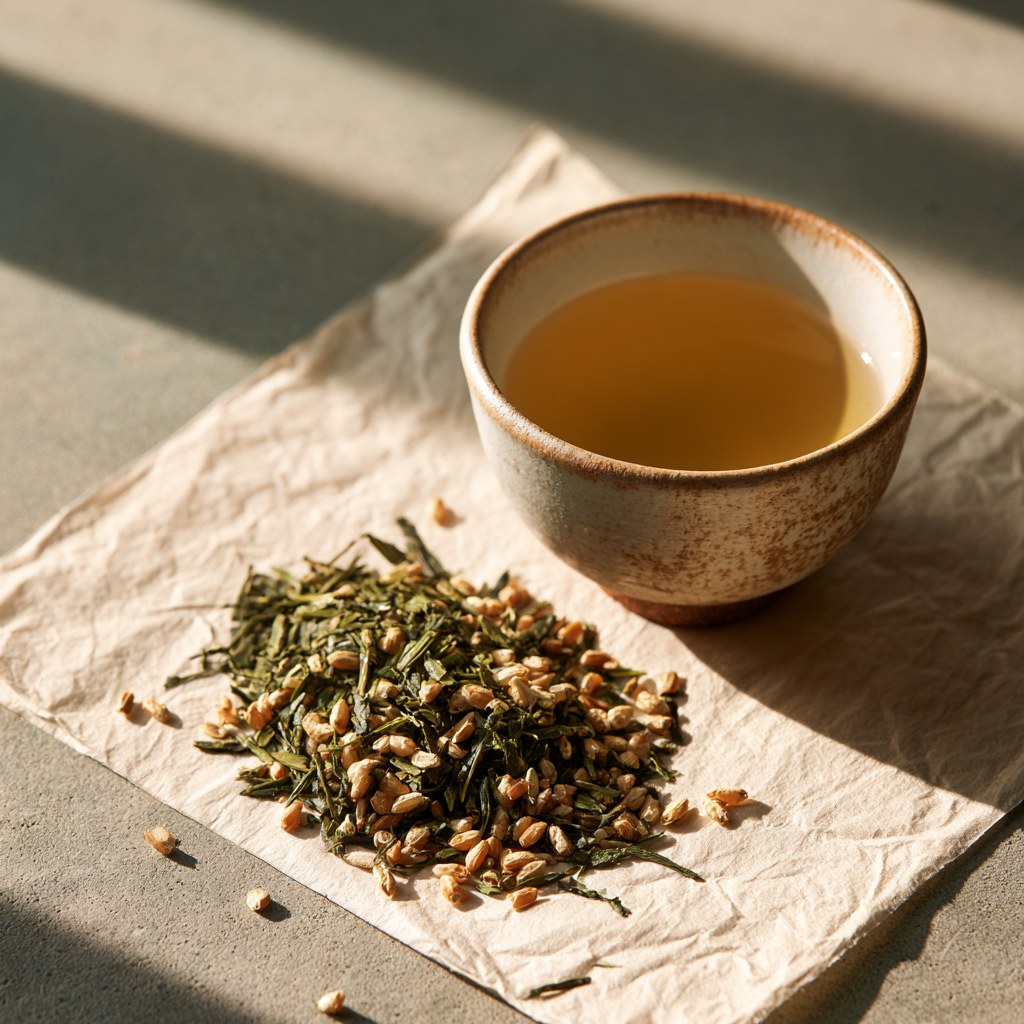


Pass the leaf through fire and the green turns amber,
the astringency settles, and a toasted fragrance rises.
Hojicha is a tea for the end of a day.
Hojicha — the tea for closing your day.
What is Hojicha
Hojicha is green tea — usually sencha — roasted at high heat. If oxidation is what makes wakocha, roasting is what makes hojicha. It is another path, one that changes the leaf through fire.
Roasting softens the astringent and bitter compounds and raises a toasted fragrance in their place. It also lowers the caffeine, so hojicha can sit with you after dinner or before bed. If green tea is the tea that wakes you, hojicha is the tea that closes the day. From the same leaf, two opposite hours.
The Alchemy of Roasting

The fragrance of roasting is not something the leaf held all along. It arises only when high heat transforms the compounds inside it. As with roasting coffee, the way the fire is handled changes everything — this is a craftsman's work. A pale amber liquor, a rising toastiness, and behind it, a faint sweetness in the finish.
KOHZEN & KUNZEN
MIOKA offers two hojichas, both from organically grown leaves in Wazuka, Kyoto, certified under Organic JAS. A difference in form is a difference in how you use them.
| KOHZEN | KUNZEN | |
|---|---|---|
| Form | Loose leaf | Powder |
| Preparation | Hot water in a teapot | Dissolved in water or milk |
| How to enjoy | After a meal, or in the evening | Hojicha latte, baking and cooking |

KOHZEN is at its best brewed briefly with properly hot water — heat lifts the fragrance, so no thermometer is needed. KUNZEN dissolves into warm milk for a hojicha latte, or into batter for baking. Beyond drinking, there is the pleasure of making.
To see where hojicha sits within Japanese tea as a whole, read A Map of Japanese Tea.
A fragrance raised by fire, to close the day.
Here's to a good finish tonight.
Fragrance Beyond Time and Borders.