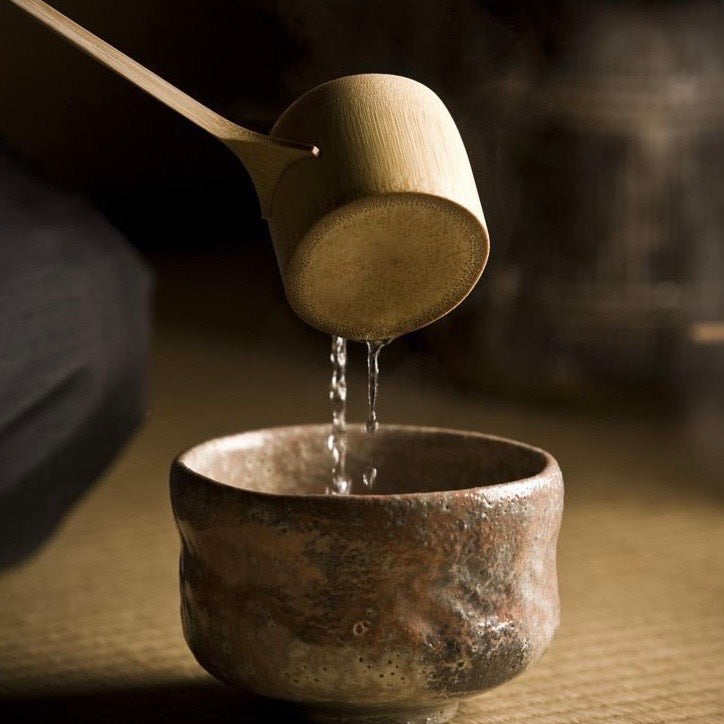


The value the world loves in matcha
is not created the moment it becomes powder.
It is already complete, on the soil of this misted valley.
Wazuka: A living tea landscape behind Uji tea.
The unseen foundation of a famous name
Almost no one in Japan is unfamiliar with the name Uji tea. Rather fewer know where that tea is actually grown.
Uji tea is not, in fact, the name of a single city. It is a brand of green tea made from leaves grown across four prefectures — Kyoto, Nara, Shiga and Mie — and finished by producers within Kyoto Prefecture using methods that originate in the Uji region.
And underpinning the actual growing of those leaves is a small town at the southern edge of Kyoto Prefecture: Wazuka.
What the numbers say about one town
Kyoto Prefecture's own figures for the 2025 fiscal year contain these proportions.
| Wazuka's share of Kyoto Prefecture | |
|---|---|
| Crude tea production | 44.8% |
| Tencha, the raw leaf for matcha | 49.0% |
| Tea garden area | 37.2% |
Roughly half of the Uji tea you know comes from this town. For matcha, close to half of the raw material is grown in Wazuka.
This is not a town of beautiful scenery alone. It is a working growing region, with production of matcha's raw material among the highest in the country.
Mist, as a natural shade
Why did Wazuka become a region for tencha? The answer lies in the shape of the land.
The Wazuka River runs through the valley, with dense forest closing in on either side. Steep, well-drained slopes; cool air; a wide swing between day and night temperatures. Where these conditions meet, thick river mist forms often.
That mist wraps the leaves. It blocks the sunlight.
Here is where the land becomes interesting. Theanine, the umami compound in the leaf, converts into the catechins behind astringency when exposed to sunlight. Block the light and the umami stays in the leaf.
What nature was already doing, people imitated. That is the technique of the shaded garden — ooishitaen.
The method of making matcha was not invented elsewhere and carried into Wazuka. It came out of the mist of this land, on this land.
The work of making shade
A shaded garden is not simply a matter of making things dark. The balance of airflow and temperature is essential.
The traditional honzu shading is built from a frame of poles and bamboo, hung with reed screens and topped with straw. It holds temperature low and humidity high, growing the new shoots slowly. Modern practice may use synthetic fibre in two layers instead, but the purpose is the same — limit the light without trapping the heat.
Growers control light and air with real precision. Making shade is a technique in its own right.
Eight hundred years as a living landscape
Tea-making in Wazuka began in the Kamakura period. Seeds are said to have passed from the priest Myoe of Toganoo to the priest Jishin of Kaijusenji temple, and cultivation began on the slopes of Mount Jubu.
In the Edo period the area became imperial land, supplying tea to the Kyoto court. Records of tea being sold in Wazuka survive from before 1738, the year the sencha method was developed in Ujitawara.
But the tea fields of this town are not a preserved relic of the past.
The yamanari gardens — following the contour lines across the mountainsides — are maintained because growers tend them day after day, from eight hundred years ago to the present. It is a living landscape.
The view itself is the evidence of work still going on.
Already, before it becomes powder
Matcha is loved the world over. But the powder is only the tip of the iceberg.
Beneath it is tencha, dried without rolling. Beneath that, the shaded gardens that make the shade. And beneath that, eight hundred years of mist and slope and temperature swing.
The true value of matcha is not created in the moment it is ground on stone. It lives in the mountains and the mist, before it becomes powder.
That is why every MIOKA leaf comes from this land.
More on Wazuka: ORIGIN — Wazuka, Kyoto. On shade-growing and matcha: #T002|What is Matcha.
The town that holds up the name of Uji tea,
with its soil and its mist.
Fragrance Beyond Time and Borders.