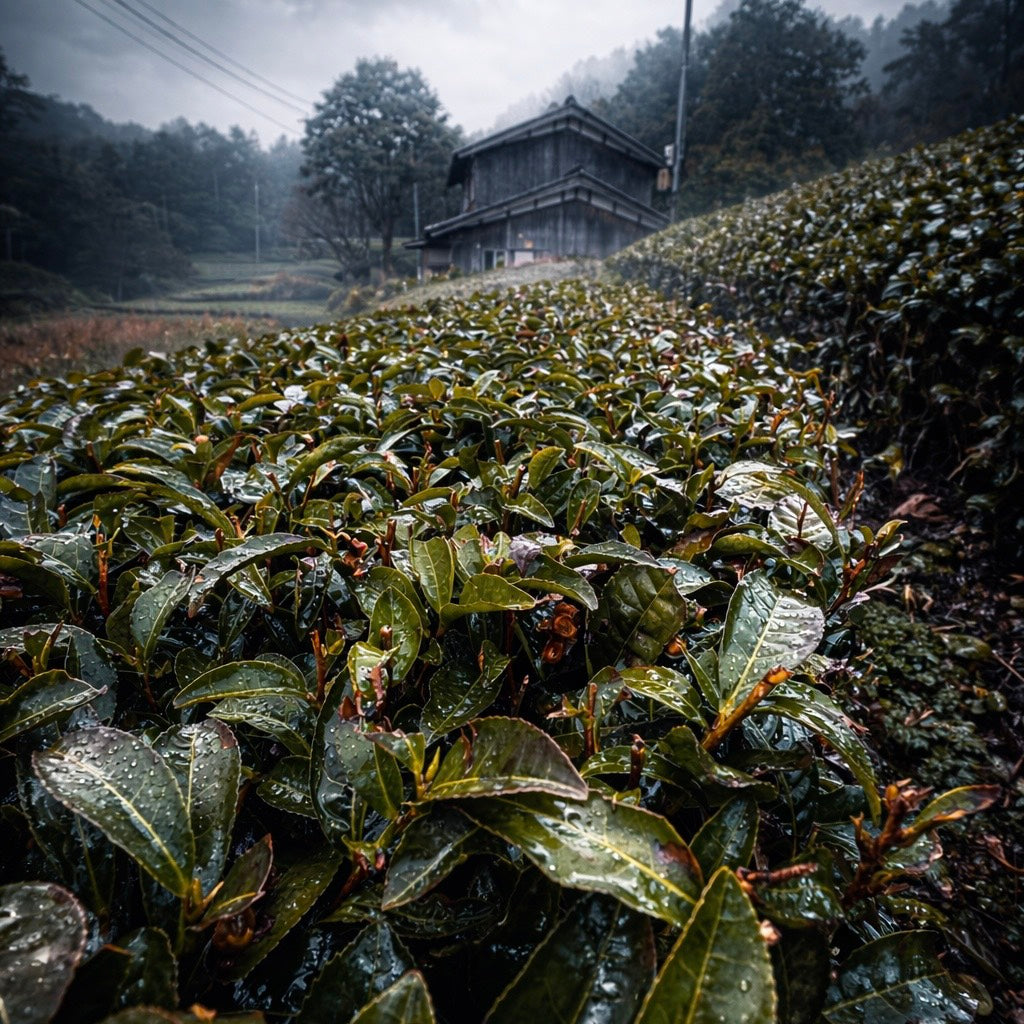


Dew drops falling on the tea field
In a tea field wrapped in morning mist, a drop of dew sways at the tip of a tea leaf. At this moment, what will the tea leaf become? Sencha, gyokuro, or matcha?
The sameCamellia sinensisFrom a single tea tree, completely different aromas and flavors are born depending on cultivation and manufacturing methods. This is the mysterious charm of Japanese tea, an art born from over a thousand years of craftsmanship and reverence for nature.
The memories of leaves crossing time
In the early Heian period, it was brought by envoys to Tang China and studying monks.The history of Japanese tea is truly a story of cultural inheritance and innovation.In 815, the monk Eicho brewed tea and offered it to Emperor Saga.In this recorded era, tea was still a special drink only for nobles and monks.
In the Kamakura period, Eisai brought tea seeds from Song China and presented the "Kissa Yojoki" to Minamoto no Sanetomo in 1214.Then, tea spread to the samurai class. Tea at this time was close to matcha.In China, it had long been used as medicine.Therefore, it was natural that the term "a cup" was born.
In the mid-Edo period,In 1738, Nagatani Soen devised the "blue-green sencha manufacturing method."Then, the world of tea changes dramatically.By incorporating the kneading process of tea leaves, the vivid green color is maintained and the flavor improved.Newly made sencha became an everyday cup accessible to the common people.
The individuality each leaf weaves
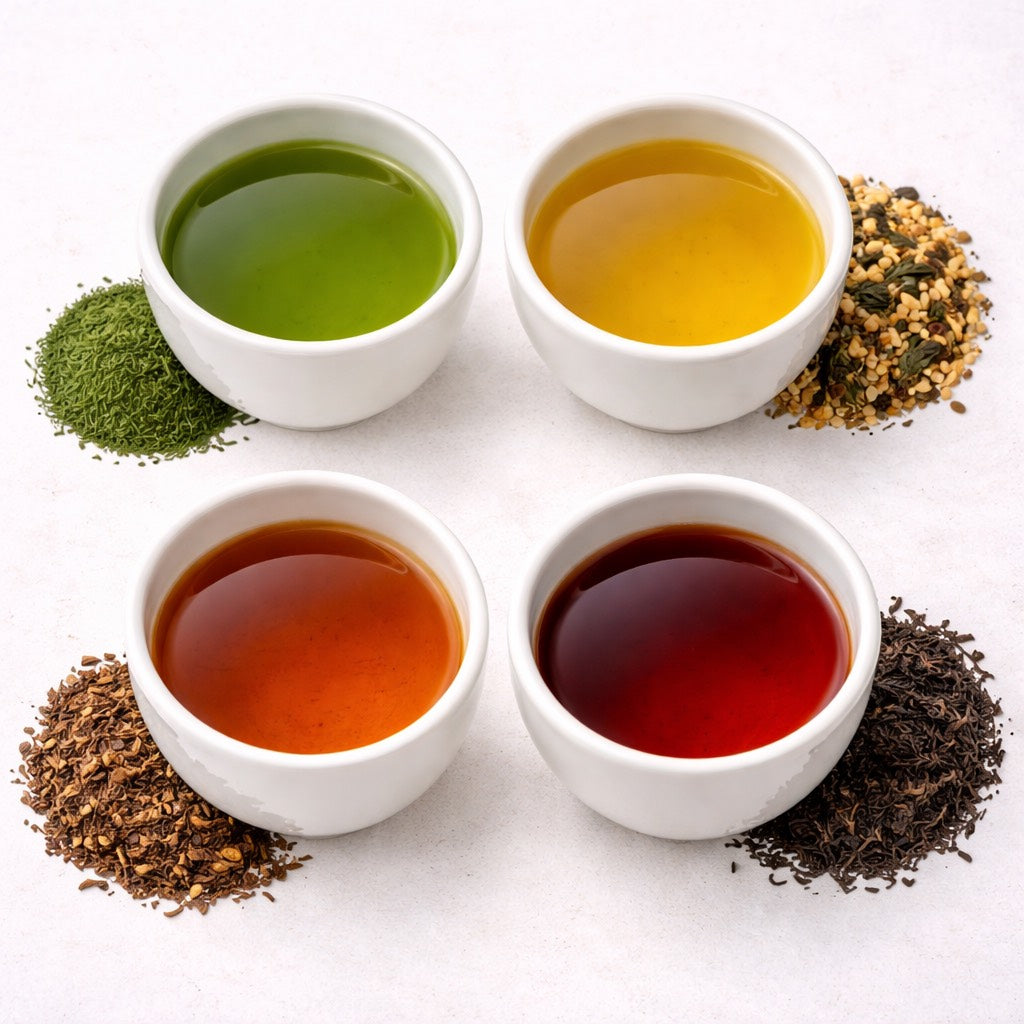
Sencha: Leaves wrapped in the blessings of the sun
about 60% of green tea produced in Japan.Sencha is,are immediately steamed and kneaded after picking new buds.It is the most popular Japanese tea. Tea leaves grown under plenty of sunlight,The balance of sweetness (theanine) and astringency (catechin) is exquisite.It suits every occasion, from everyday dining tables to special hospitality.
with water temperature at 70°C for premium tea and 80-90°C for mid-grade sencha.is suitable,2 to 3 grams of tea leaves per person (100ml)is used.The liquor color changes depending on steaming time; light steaming yields a golden color, and deeper steaming results in a darker green.The sight is truly like a natural color palette.
Gyokuro: The finest umami nurtured in the shadows
Made from tea leaves grown under shade, it has a strong umami and sweetness, ranking among the highest-grade Japanese teas.Gyokuro.About three weeks before harvest, the tea garden is covered to block sunlight and nurture new buds.This cultivation method gives the tea leaves a special character.
brewed slowly for one minute with water cooled to 50°C to 60°C.Gyokuro is,A unique aroma and umami like seaweed.spreads across the tongue.It tastes like broth.It is so rich in the deep umami component theanine that it can surprise people.
Matcha: Green powdered snow played by a stone mill
is grown under shade like gyokuro, but the shading period is about five days longer than gyokuro.Tencha,Finely ground with a stone mill is matcha.is called.A flavor where refined umami spreads within the astringency.is enjoyed along with the foam created by whisking with a chasen.
In recent years,It has become popular worldwide and is also enjoyed as Matcha.Just like that, matcha has become a symbol of Japanese culture loved beyond borders.
Hojicha: Comfort woven from a roasted aroma
made by roasting lower-grade sencha or bancha until it turns brown.Hojicha is,The appealing roasted aroma created by roasting..Since various components like caffeine sublimate and decrease during high-heat roasting, it is mild and gentle on the stomach.Due to its characteristics, it can be enjoyed safely from children to the elderly during evening moments.
Brewing at a higher temperature brings out the aroma of hojicha.Therefore, using boiling water is the key.